Industry Insights
Trailer Floor Entry Release: Check Before a Forklift Takes a Pallet Inside
A pallet and forklift approval do not prove that a trailer floor can carry the real entry condition. Use a separate trailer-entry check before loading or unloading.
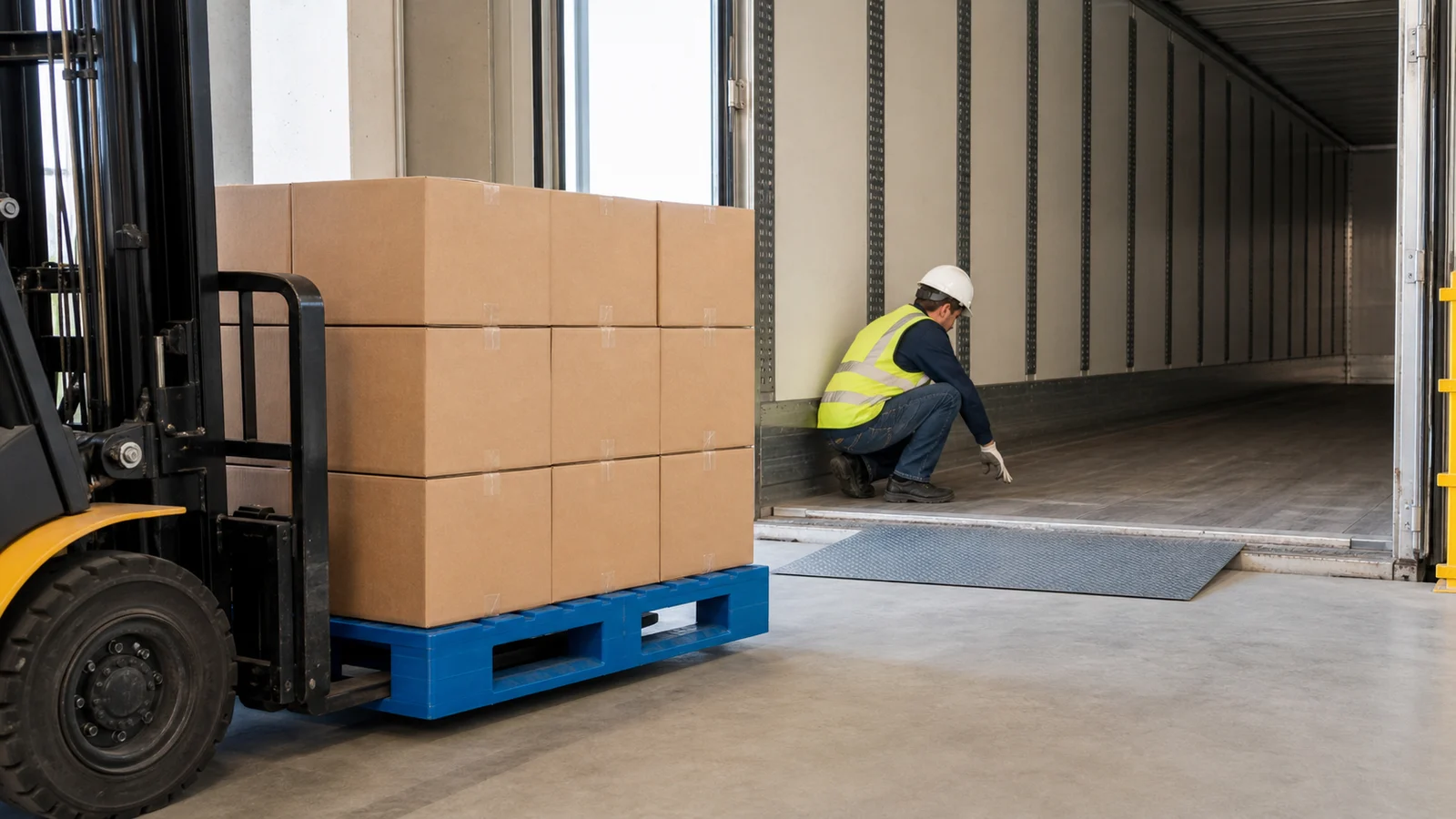
A plastic pallet can be suitable for its stated load and a forklift can be within its own rated condition, yet the next move can still be unapproved: driving the loaded truck into a trailer. Before entry, release the trailer-entry condition separately. The floor, structure, doorway, trailer restraint, and actual truck-and-load combination are not proved by a pallet drawing, a pallet test, or a previous shipment.
For U.S. workplaces, 29 CFR 1910.178(m)(7) says that truck, trailer, and railroad-car flooring must be checked for breaks and weakness before powered industrial trucks are driven onto it. OSHA’s forklift guidance also tells operators to inspect the trailer floor to be sure it will support the forklift and load. Those sources do not calculate a trailer’s capacity, certify a pallet model, or replace the trailer owner’s instructions. They do establish a useful boundary: the live vehicle floor is its own safety decision.
Do not merge three different approvals
| Decision | What it asks | Who needs to confirm it |
|---|---|---|
| Pallet and unit load | Is this pallet suitable for the stated product, mass, load pattern, and handling conditions? | Buyer, supplier, and operations as applicable |
| Forklift condition | Is the specified truck and its load condition within its own instructions and site controls? | Equipment owner and site operator |
| Trailer entry | Can this trailer floor and structure carry the actual forklift and completed palletized load for this loading or unloading operation? | Employer/site, carrier, trailer owner, and responsible operator as applicable |
The last question begins after the dock threshold. The dockboard load release checks the bridge and crossing. A trailer-entry release checks the floor and structure the truck will travel over once it is inside. One does not replace the other.
Inspect the actual entry condition
Start with the trailer that has arrived, not a generic trailer category. OSHA’s technical bulletin on suspension-type highway trailers explains why visible damage can be a warning that a trailer may not support the powered truck used to load or unload it. It recommends inspection before the operation and continued observation of newly exposed floor while unloading. The bulletin is guidance for that trailer construction; it is not a universal inspection form or a statement that any observed mark makes every trailer unsafe.
Before a changed or unfamiliar palletized operation, have the party controlling the work record facts such as:
- trailer or asset identity and the available carrier or owner instructions;
- forklift or powered pallet-truck model, attachments, and approximate operating mass;
- completed unit-load mass, footprint, height, and any concentrated contact condition;
- floor condition visible at entry, including broken, missing, soft, wavy, wet, or otherwise questionable areas;
- doorway height and route clearance for the actual vehicle and load;
- trailer restraint, brakes, supports, dockboard, lighting, and communication controls required by the site; and
- the stop-and-escalation owner if the floor condition or documentation is unclear.
This is reasoned operating guidance, not an OSHA-mandated form. Its purpose is to prevent an informal “pallet approved” note from being used as permission to send a loaded truck into a trailer that has not been assessed for the work.
Recheck when the real load changes
A prior entry is not automatic approval for a heavier SKU, a different forklift, a powered pallet truck, a changed attachment, a new pallet height, or a different unit-load footprint. These changes can alter the vehicle-plus-load condition, wheel path, clearance, or loading sequence. The pallet load-centre check remains relevant for the forklift; it does not establish trailer-floor suitability.
During unloading, do not assume the floor remains in the same condition as the door area. OSHA’s bulletin specifically advises checking newly exposed floor as the unloading proceeds. If the responsible operator sees damage or cannot establish that entry is safe, stop and use the site escalation process. The carrier, trailer owner, employer, or qualified authority may need to determine the next method; a pallet supplier cannot make that determination from pallet data.
Practical decision rule
Release a palletized trailer entry only after the responsible parties can identify the actual trailer, its floor condition, the transfer vehicle, the completed unit load, and the controls for the operation. For U.S. work, apply the cited OSHA requirement and guidance within their stated scope. Elsewhere, confirm the applicable local rule, carrier conditions, trailer instructions, and site procedure.
The supplier’s useful contribution is accurate pallet-model evidence and stated limits. The final decision to drive a forklift into a live trailer belongs with the people who control the trailer, the equipment, and the loading operation.