Buying Guides
Commercial Wheeled Bins: A Collection-Day Safety Check
Use this bounded checklist to decide when a large wheeled-bin area needs access controls, collector coordination, or a site risk assessment before collection.
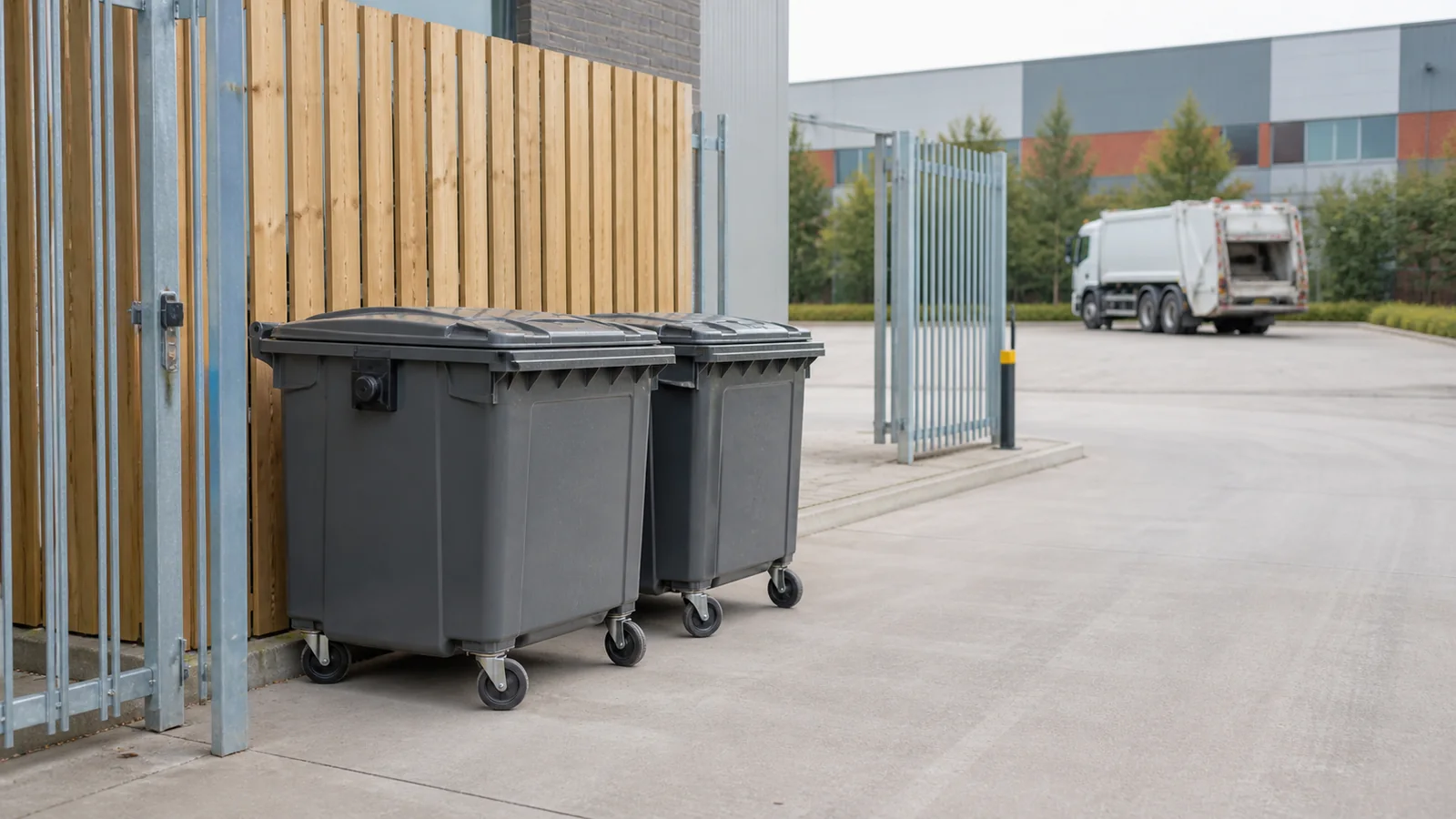
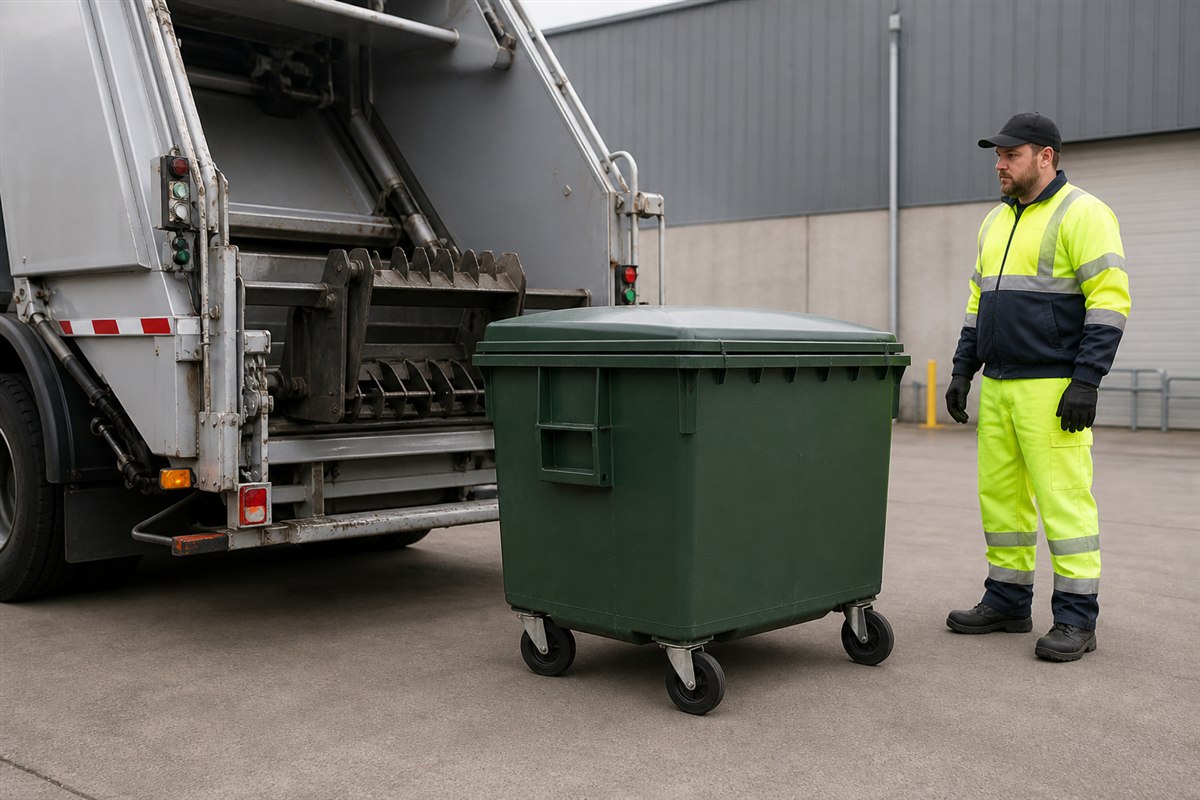
For a large commercial wheeled bin, do not treat a closed lid as the whole safety decision. Before collection, check whether people can reach or enter the bin area, whether the collection route is predictable, and whether your site and collector have a clear response if something is unusual. If access is reasonably foreseeable, use the site risk assessment and the collector’s current procedure to choose controls.
This tool is aimed at commercial or communal storage areas with large bins, commonly 660 litres or more and on four wheels. It is not legal advice, a bin/vehicle compatibility approval, or a replacement for local duties, the waste contractor’s instructions, or a competent safety assessment.
Start with a simple decision
Use the ordinary storage path only when the area is routinely observed, adequately lit at relevant times, controlled against unauthorised entry, and the collection arrangement is known. Move to a site-specific review when any answer below is unclear or changes.
| Check | Ordinary answer | Escalate when |
|---|---|---|
| Access | The bin area is secure or routinely supervised. | The area is open, isolated, or easy to enter unnoticed. |
| Visibility | Lighting and sight lines are adequate at collection time. | It is dark, hidden, or activity is hard to see. |
| Bin access | Lids and openings do not make entry reasonably foreseeable. | Lids are easy to open, reach, or climb into. |
| Collection day | Staff know the route, timing, and who reports a concern. | Different vehicles, changing times, or public access create uncertainty. |
| Condition | The bin, lids, wheels, and any security device are usable. | Damage, obstruction, overflowing waste, or a failed device is found. |
The UK Health and Safety Executive (HSE) identifies isolated, dark, open, and unsecured storage areas as increased-risk conditions. It also says businesses managing storage areas should consider secure siting where practicable, watch for signs of attempted entry, and check bins regularly, especially before collection. These points are direct support for the checklist, but the practical controls must fit the site. HSE: preventing people getting into large bins .
Run this pre-collection check
- Walk the route. Note gates, lighting, parked vehicles, pedestrian paths, blind spots, and anything that changes the collection vehicle’s approach or the bin’s location.
- Look without rummaging. Check for unexpected contents, signs of disturbance, or signs someone could be in the bin. HSE says a visual check is normally enough; physically disturbing contents is not necessary and should be avoided.
- Check access controls. Confirm that any lock, lid-opening restrictor, grille, or enclosure is appropriate for the assessed risk and is maintained and used according to its supplier instructions.
- Confirm the collection interface. Give the collector the information the site procedure requires: changed access, obstructions, damaged bins, unusual waste, or a concern about people in the area. Do not assume one bin model is compatible with every lifter or route.
- Stop and escalate. Do not improvise a rescue, force a damaged bin, or override the collector’s procedure. Use the site’s emergency and reporting arrangements when a person is found or an immediate hazard is suspected.
Put the right questions in a bin RFQ or service review
When buying or reviewing large wheeled bins, keep two decisions separate: the product specification and the collection operation. A supplier can describe a specific bin model; the vehicle owner and site must confirm their own interface and operating controls.
| Ask for | Why it belongs in the record |
|---|---|
| Exact bin model, capacity, dimensions, lid and wheel configuration | Identifies the item being considered. |
| Intended storage location and access arrangement | Shows whether siting, lighting, or access restrictions need review. |
| Collection vehicle/contractor procedure | Keeps vehicle and lifting-interface confirmation with the responsible operator. |
| Security-device instructions and maintenance responsibility | Avoids treating a fitted device as proof it is suitable or in use. |
| Change triggers | Recheck after a route, site layout, bin model, access pattern, or collection method changes. |
Know the boundary
HSE’s guidance is UK guidance and is especially relevant to large commercial and communal bins. Other jurisdictions, contracts, local authorities, waste streams, vehicle equipment, and site conditions can require different controls. HSE’s wider workplace-transport guidance recommends mapping vehicle and pedestrian activity, including occasional tasks such as waste collection, before deciding controls. HSE: workplace transport risk assessment
This resource gives a buyer a usable starting control: identify access, visibility, condition, and collection-day changes before treating a large wheeled-bin arrangement as routine. It does not certify a bin, approve a collection vehicle interface, or replace the site owner, collector, or competent adviser.