Buying Guides
Reusable Produce Crates: A Return-to-Use Check
Use this bounded check before reusable plastic produce crates return to food handling after use, outdoor storage, damage, or an uncertain cleaning history.
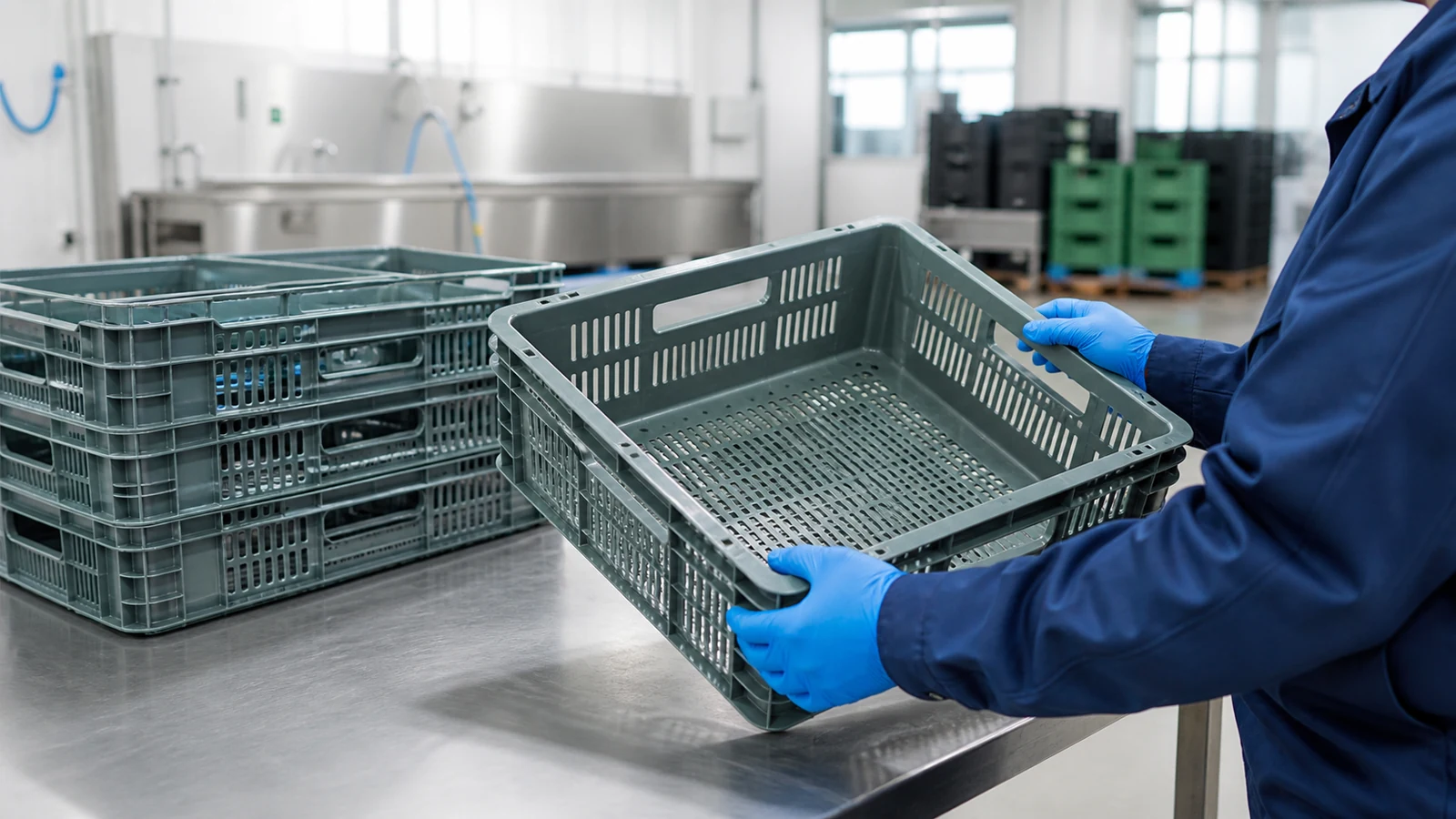
An empty crate is not automatically ready for food handling because it looks clean. Before it returns to a produce loop, separate four questions: is it sound, has it been cleaned to the operation’s approved process, has that process been verified where required, and has the crate been protected from recontamination? If any answer is unknown, hold the crate out of the clean pool and use the site’s food-safety procedure.
This is a procurement and operating check for reusable plastic crates used with whole fresh produce. It does not set a universal cleaning chemical, contact time, microbiological limit, or legal requirement. Those choices depend on the product, process, jurisdiction, customer specification, chemical supplier instructions, and the operation’s food-safety plan.
Use the four-gate decision
| Gate | Return to the clean crate pool only when | Hold and escalate when |
|---|---|---|
| 1. Condition | The crate is intact, cleanable, and free of cracks, sharp damage, embedded residue, or a fault that can trap soil. | Damage, residue, odor, pest evidence, or a surface that cannot be effectively cleaned is found. |
| 2. Process | The applicable cleaning and, where required, sanitizing process is known and was completed by the responsible operation. | The crate’s cleaning history, prior use, chemical process, or required rinse is uncertain. |
| 3. Control | Any required checks, records, and release decision are complete under the site’s plan. | A required record, concentration check, inspection, or release authority is missing. |
| 4. Protection | The released crate was stored and moved so dirt, pests, standing water, or other contamination is controlled. | It was stored outdoors or in an uncontrolled area, exposed to a contamination event, or mixed with dirty returns. |
The US Food and Drug Administration’s fresh-produce guidance says containers should be inspected regularly and that damaged container surfaces should not be used because they can harbour microorganisms and damage produce. It also advises cleaning pallets, containers, or bins before transporting fresh produce, and protecting cleaned or new packing containers in storage from pests, dirt, and condensation. FDA guidance .
Make the decision at the return point
- Keep dirty returns separate. Do not mix used, outdoor-stored, damaged, or unknown-status crates with released crates. Give the return area a clear status and a defined route to inspection or cleaning.
- Inspect before release. Look at corners, ribs, handles, drainage openings, and stacking features for breakage, trapped debris, damage, or anything that makes cleaning unreliable. Do not try to approve a visibly compromised crate by wiping it down.
- Use the approved process, not a generic recipe. “Sanitized” only has meaning in the context of a defined process. FDA distinguishes a visually clean food-contact surface from sanitizing, which follows cleaning and must be effective for the intended surface and operation. Follow the local plan and the chemical/equipment instructions rather than copying a concentration or time from this article.
- Protect the clean state. Keep released crates away from soil, waste, pests, pooled water, and overhead condensation. A crate kept outside after cleaning should not be assumed clean on return; route it back through the site’s decision process.
- Release or hold. Release only when the required condition, process, control, and storage answers are affirmative. Otherwise tag or segregate the crate and escalate to the designated quality or food-safety owner.
Turn the check into a crate-loop specification
When buying reusable crates or designing a return loop, ask the supplier for product information and keep food-safety release decisions with the operation.
| Ask for | Why it matters |
|---|---|
| Exact crate model, material declaration, dimensions, and load/stacking limits | Identifies the item and its intended use. |
| Cleanability features and the manufacturer’s care instructions | Helps the operation assess whether its approved process is suitable; it is not a sanitation validation. |
| Damage-rejection criteria and replacement route | Avoids returning cracked or uncleanable crates to the loop. |
| Return-flow layout: dirty receipt, cleaning, release, and protected storage | Makes status separation visible rather than relying on memory. |
| Required records, owner, and change triggers | Keeps release evidence with the responsible food-safety system. Recheck after a new crop, chemical, wash method, storage condition, customer rule, or contamination event. |
Know the evidence boundary
FDA’s guidance is US guidance for fresh fruits and vegetables. It supports the practical gates above but does not certify a particular plastic crate, approve a facility’s sanitation program, or replace applicable local law and customer requirements. For food and drink work, HSE also identifies stacking and unstacking containers, including crates, as manual-handling tasks that should be assessed in the actual work setting. HSE food and drink manual-handling guidance .
Use this resource to decide what must be confirmed before a reusable crate re-enters a clean produce loop. Confirm the actual cleaning method, chemical compatibility, verification records, storage controls, worker handling, and local duties with the responsible quality, food-safety, and operations owners.