Industry Insights
Forklift Load Backrest Check: When a Palletized Load Needs Its Own Review
For U.S. workplaces, review whether the actual palletized load can fall toward the operator and whether the forklift's load backrest extension is needed; a pallet trial does not answer that question.
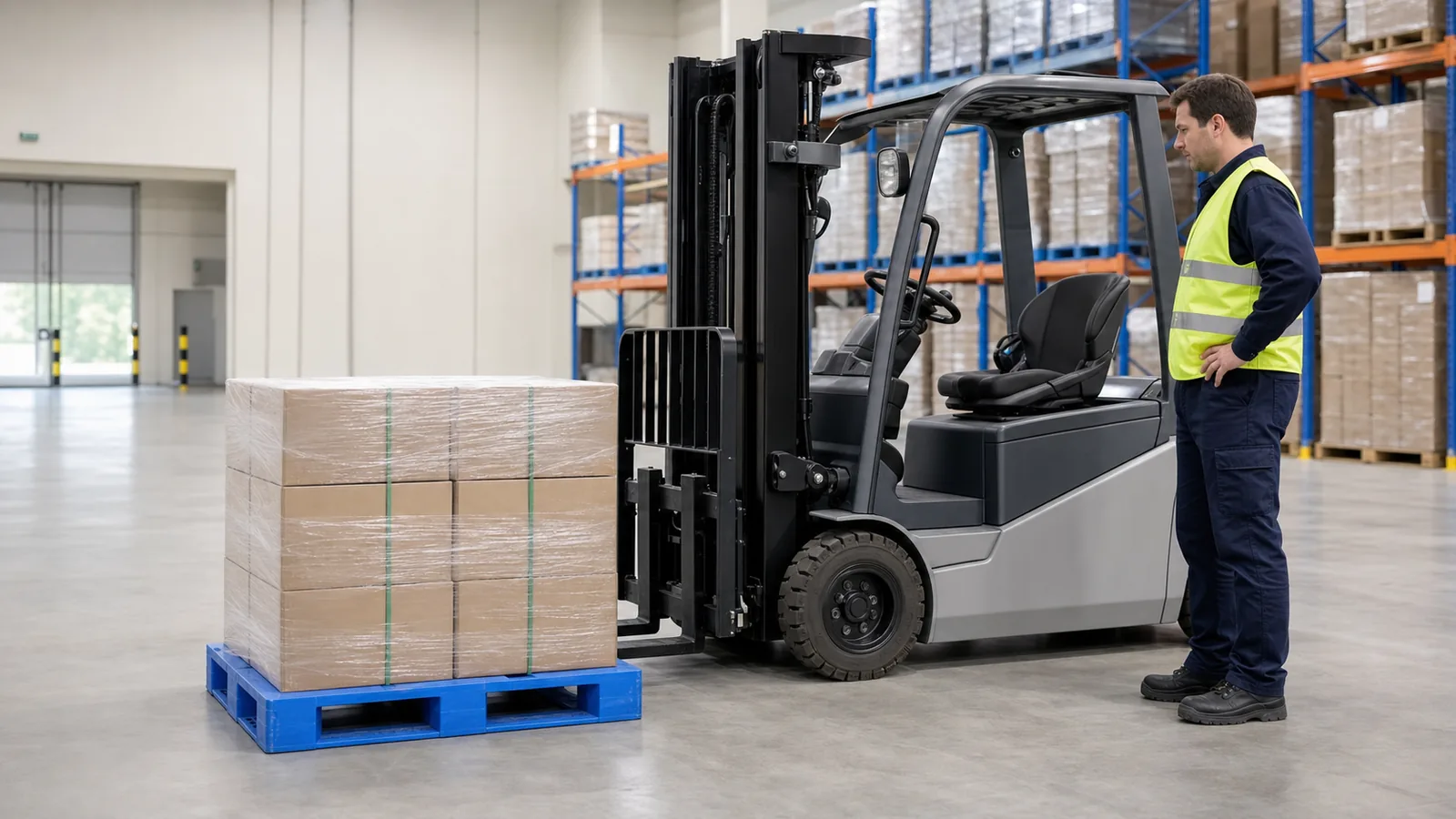
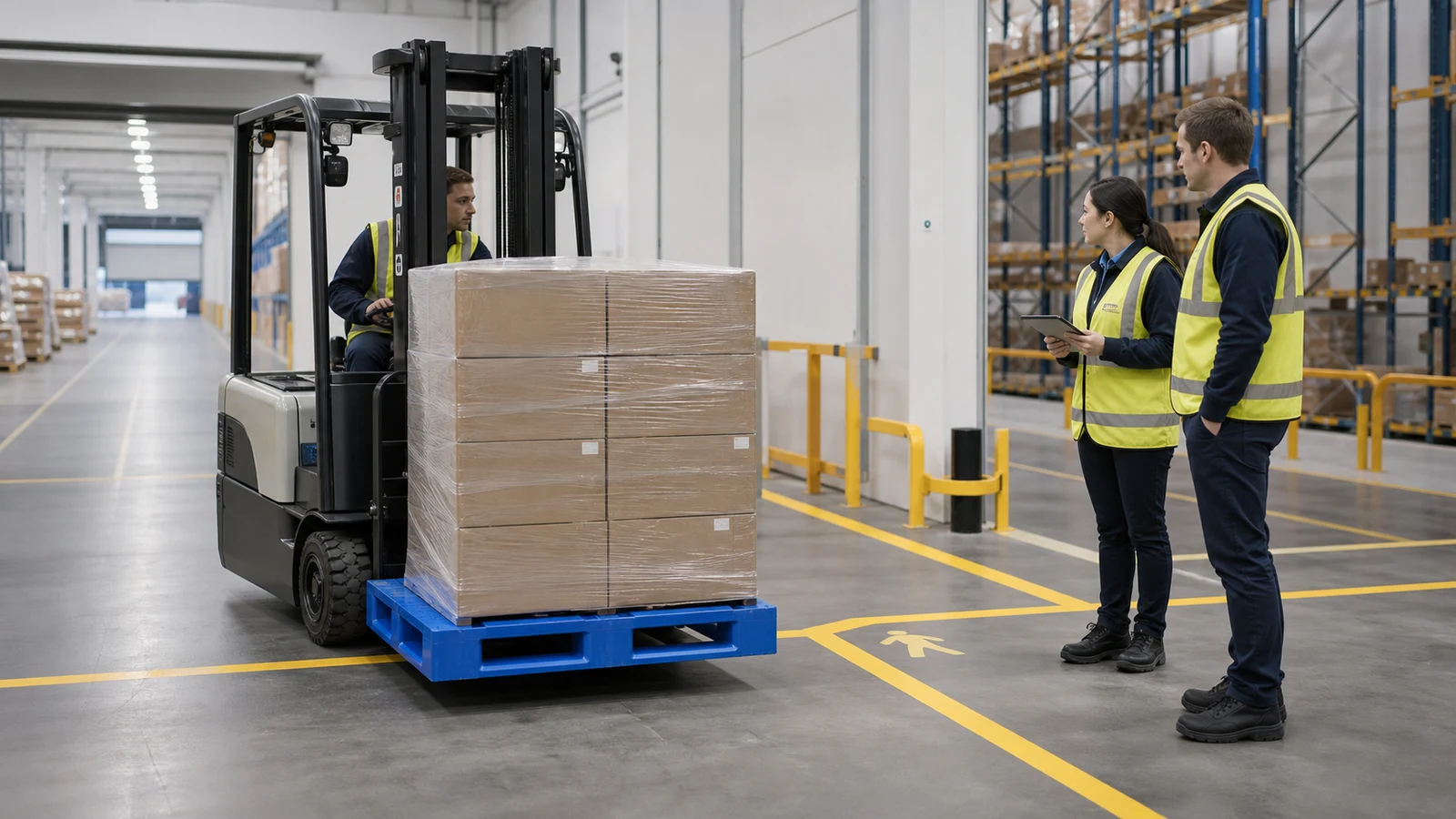
A plastic pallet can pass a fork-entry trial, and the completed unit load can still need a separate forklift review. One missed item is the load backrest extension: the vertical structure behind the forks that can help keep part of a raised load from moving rearward toward the operator.
For a U.S. workplace, 29 CFR 1910.178(m)(10) says a load backrest extension must be used whenever necessary to minimize the possibility of the load, or part of it, falling rearward. OSHA’s forklift guidance also describes lifting a load clear and tilting the mast back slightly so the load rests against the backrest extension. Those are U.S. operating requirements and guidance. They do not approve a plastic-pallet model, calculate a truck’s capacity, or replace the truck manufacturer’s instructions.
The practical action is to release the actual truck, backrest condition, palletized load, and route together. Do not turn a pallet supplier’s handling statement into evidence that every load is protected from rearward movement.
Start with the load that can move, not the pallet label
The relevant question is not whether the pallet is plastic, wooden, open deck, or closed deck. Ask whether any part of the completed load could move rearward under the normal lift, tilt, braking, or placement conditions. A changed carton pattern, taller stack, loose top layer, damaged packaging, slip sheet, overhang, or different pickup orientation can change that answer without changing the pallet model.
Keep these decisions separate:
| Decision | What it answers | Who should confirm it |
|---|---|---|
| Pallet and fork fit | Can this model be entered and supported under its stated handling conditions? | Buyer and pallet supplier, with a route trial where needed |
| Truck capacity condition | Does the actual load remain within the truck’s stated configuration and load-centre condition? | Truck owner, manufacturer, dealer, or responsible site process |
| Backrest condition | Could the completed load, or part of it, move toward the operator, and is the installed backrest appropriate and available? | Employer/site safety owner and truck owner under applicable instructions |
One approval cannot silently cover the other two. The pallet load-centre check addresses whether unit-load geometry can change the truck’s capacity condition. The fork-entry clearance record addresses pallet handling fit. This page adds a narrow, different release: whether the real load and forklift backrest condition must be reviewed together.
Make the backrest visible in the release record
Before a new pallet, load pattern, or truck configuration becomes routine, let the responsible site owner record the facts below. This is reasoned operating guidance, not an OSHA form.
| Record | What to capture |
|---|---|
| Truck | Make/model, mast, fork length and spacing, current capacity information, and applicable operator instructions |
| Backrest | Whether the truck has the intended vertical load backrest extension, its visible condition, and any equipment-owner limit or instruction |
| Completed load | Pallet model, gross mass, loaded height and footprint, carton pattern, wrap or bands, overhang, loose items, and pickup direction |
| Handling condition | Normal fork insertion, lift height, mast position, travel, turns, rack or trailer placement, and unloading method |
| Change trigger | New SKU, higher stack, altered wrap, different pallet orientation, damage, new truck, attachment, mast, or route |
The supplier’s useful input is narrow: current pallet drawing, mass, stated load and support conditions, fork-entry directions, and any product-specific limits. The supplier should not be asked to certify a customer’s forklift backrest, operator practice, load security, or workplace procedure.
Check the complete unit load before routine handling
OSHA’s forklift material identifies damaged or loose loads, off-centre loads, overloading, and falling loads as hazards. For the exact truck and operation, the responsible owner should inspect the normal load rather than an empty pallet or a tidy showroom stack.
Pause the release when any of these facts are unknown or changed:
- the top layer, cartons, totes, or other parts can move independently of the pallet;
- packaging is damaged, wet, weak, badly wrapped, or no longer holds the load as intended;
- the load is taller, wider, offset, or picked up from a different direction than the approved condition;
- the truck’s backrest is missing, damaged, altered, or its applicable instructions are unavailable; or
- a new attachment, mast, fork set, rack position, trailer, or route changes the handling condition.
Do not invent a universal height, tilt angle, wrap count, or backrest dimension. Those details depend on the actual truck, load, packaging, attachment, route, and manufacturer instructions. A controlled site trial can show a condition that needs correction; it is not a substitute for regulatory duties, training, or equipment-owner confirmation.
Do not confuse a backrest with a load-control system
A backrest does not make a loose or damaged unit load acceptable. It does not prove the pallet supports the load, establish the truck’s capacity, eliminate a blocked-view route issue, or replace load securing. It is one part of a system that also includes fork position, centred loading, load condition, truck configuration, route controls, and trained operation.
For example, a blue plastic pallet may keep cartons off the floor and enter forks cleanly. If the upper cartons can shift toward the mast, the buyer still needs the responsible site owner to assess the actual load and the available backrest condition. Conversely, an installed backrest does not approve a pallet that is too small, badly damaged, outside the truck’s capacity condition, or unstable during transport.
For a changed front-end attachment, use the forklift attachment change review first; attachments can change capacity, visibility, and contact points. If the completed load blocks travel visibility, the forklift route-release guide covers the separate site-route decision.
Practical decision rule
For U.S. operations, do not describe a palletized load as forklift-ready merely because the pallet passed a trial. Identify the actual completed load, truck configuration, and vertical load backrest condition. Where rearward movement could create a hazard, have the employer/site safety owner and truck owner confirm the applicable control and instructions before routine use.
For other jurisdictions, confirm the local rule and the equipment manufacturer’s requirements with the responsible safety and operations owners. The safe boundary remains the same: a pallet supplier can state pallet facts; the party controlling the truck and live operation owns the final handling release.