Industry Insights
EU Reusable-Pallet Labels: Separate Existing Fleet From New Purchases
Use the EU's 2026 PPWR guidance to classify reusable transport packaging by its market-placement date before changing pallet records or labels.
For an EU reusable-pallet fleet, do not use one label answer for every unit. The European Commission’s 2026 PPWR guidance separates reusable transport packaging placed on the Union market before 11 February 2025 from packaging placed there after that date. That date can change the record you need to keep and the transition you should plan; it does not by itself prove that a pallet, a return loop, or a customer route is compliant.
The immediate buyer task is to split the fleet and the purchase pipeline by first market-placement date before changing an RFQ, a pallet label, or a customer statement.
Start with a three-part inventory
For each pallet or reusable load carrier family, record the exact model, the first EU market-placement date (if known), the evidence owner, and the route or pool where it is used. Then place it in one of these working groups:
| Group | Practical record action |
|---|---|
| Existing fleet: placed before 11 February 2025 | Keep the product identity and reuse-system record. The Commission guidance says these units may remain in circulation until they leave the reuse system because of functional obsolescence or operating limits. |
| Transition stock: placed from 11 February 2025 until the reusable-packaging labelling requirements apply | Preserve date, model, and label/change history. The guidance says this group should comply with the labelling requirements by February 2032. |
| New purchase or design under review | Ask the responsible EU operator which forthcoming label specification, information route, and implementation date apply before locking a moulded mark, durable label, RFID layout, or customer instruction. |
This is an inventory rule, not a legal classification by itself. If the placement date is uncertain, do not guess from an invoice date, a pallet’s apparent age, or a supplier’s general product-family statement. Ask the responsible supplier, importer, pool operator, or EU economic operator for the record that establishes the relevant placement date.
What the new guidance changes
The Commission Notice states that PPWR entered into force on 11 February 2025 and applies from 12 August 2026. It explains that Article 11 reuse criteria apply to packaging placed on the market from the entry-into-force date, while authorities can check compliance after the application date. It also says the guidance does not replace or amend the PPWR; the Regulation remains the source of legal obligations.
For reusable transport packaging labels, the Notice says an implementing act should be adopted by 12 August 2026. It describes the current transition as follows: reusable transport packaging placed on the market after 11 February 2025 but before the labelling rules apply should comply at the latest by February 2032. It also notes that business-to-business reusable transport packaging managed in a closed-loop system can meet the Article 12(5) conditions for information through a website or accompanying documentation.
Those statements do not mean that every plastic pallet needs a new physical label today. They do mean that a buyer should avoid approving a permanent marking, data carrier, or customer declaration without retaining the date and system information needed for the eventual rule.
Use one record for the pallet and another for the route
Do not turn a label into proof of a reusable system. Keep two linked records:
- Pallet identity record: model, size, material route where stated, drawing or revision, label/RFID option, first EU market-placement date, and supporting-document owner.
- Reuse-system record: owner, collection and return points, inspection or reconditioning rule, rotation or loss record, and the operator responsible for the PPWR assessment.
The existing EU reusable-pallet records guide helps build the second record. This page adds the time-based split that is useful before a buyer changes labels or commits to a new pallet order. The earlier pallet-wrap exemption guide remains separate: a wrap or strap exemption does not decide the status or labelling path of the pallet.
A short RFQ and change-control check
Before approving a new EU reusable-pallet purchase, ask:
- Who places this exact pallet model on the EU market, and who owns the supporting record?
- What date and document establish the first market placement for this quoted lot or fleet?
- Is the pallet managed in a closed-loop B2B reuse system, and who owns the information route?
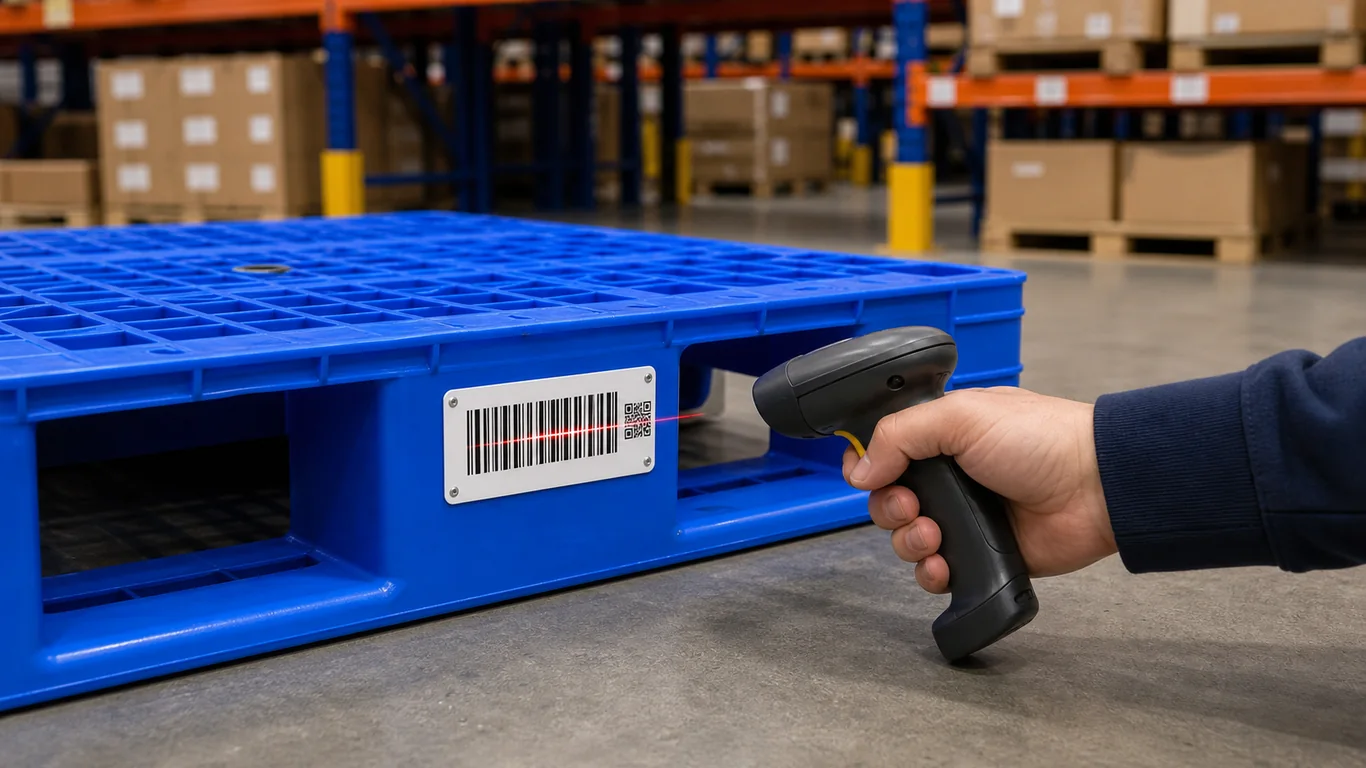
- Which label, digital identifier, accompanying document, or refurbishment change could be needed when the applicable specifications are final?
- Who will review the planned wording against the final PPWR text and implementing measure before it is presented as a compliance claim?
Avoid two shortcuts. A supplier’s statement that a pallet is “reusable” does not decide its EU legal treatment, and a 2025 date does not show whether the actual unit belongs to an existing fleet or a post-entry-into-force placement group. The exact product, date, operator, route, and final applicable requirements still matter.
Practical decision rule
Classify the fleet before redesigning the label. Retain the evidence behind the date, keep product identity separate from reuse-system evidence, and leave the final legal interpretation with the responsible EU operator or adviser. Confirm the exact pallet model, market-placement date, route, final label specification, refurbishment plan, and customer acceptance before purchase or external claims.