Industry Insights
EU PPWR and Imported Pallet Loads: Map the Route From the First EU Warehouse
Separate import, first-warehouse, onward-distribution, reuse-system, conformity, and EPR decisions before changing an imported pallet route under the EU PPWR.
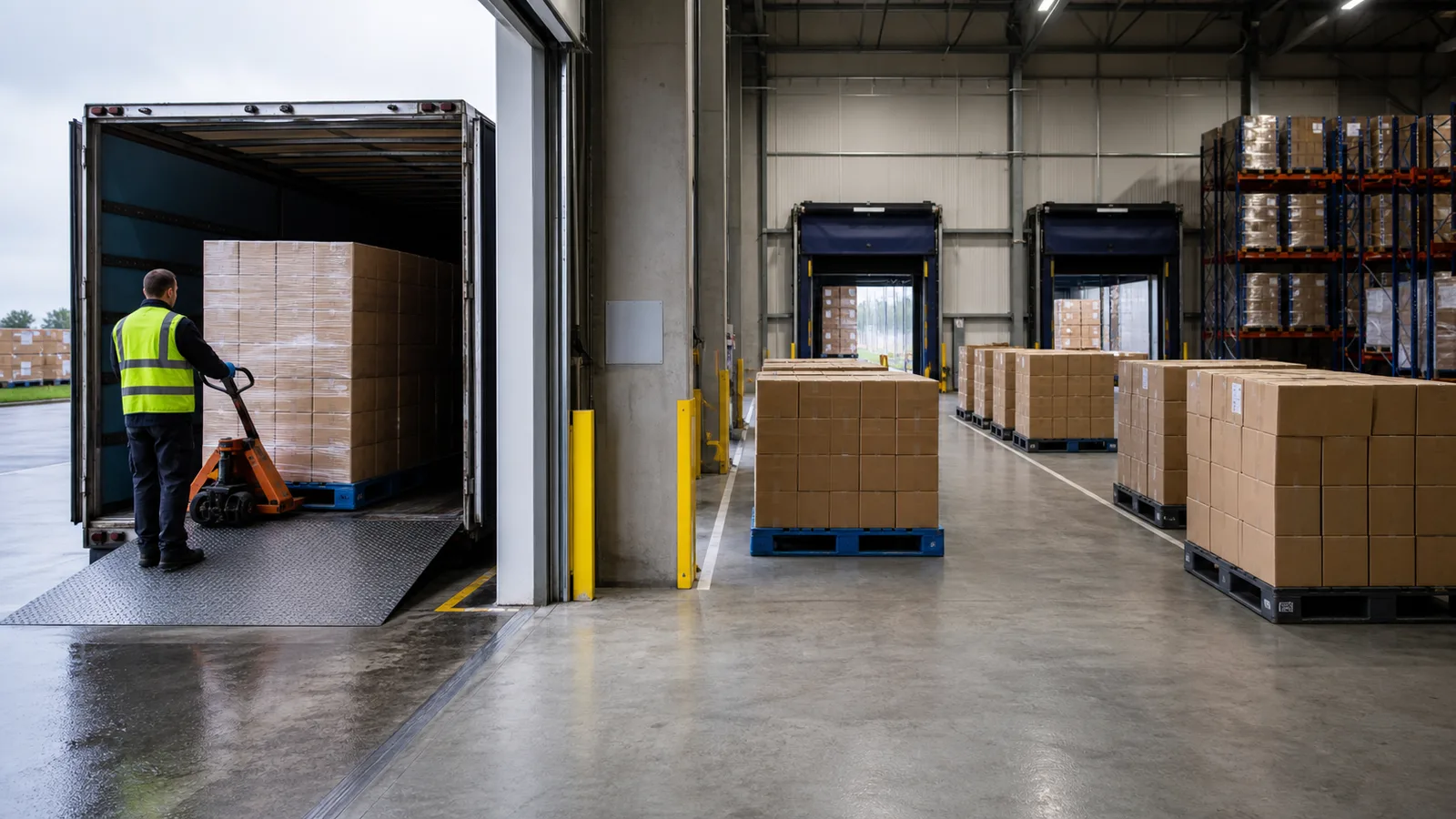
When palletised goods arrive from outside the EU, the first EU warehouse is an important checkpoint under the Packaging and Packaging Waste Regulation (PPWR). It is not, however, a universal answer to every PPWR question. The transport-packaging reuse target, the importer’s conformity duties, the manufacturer’s duties, and extended producer responsibility (EPR) follow different tests and may belong to different organisations.
The practical task is to draw the shipment from the non-EU dispatch point to its final EU destination before deciding whether a pallet must enter a reuse system, who must hold which evidence, or what a supplier should be asked to change.
This article is an operational planning aid, not legal advice. The PPWR has applied since 12 August 2026, while the transport-packaging reuse targets discussed below start on 1 January 2030. Confirm the actual route, economic operators, Member States, applicable exceptions, and national requirements with the responsible EU operator or adviser.
The first warehouse rule answers one bounded question
The European Commission’s 2026 PPWR guidance explains how the Article 29 reuse targets apply to transport packaging arriving from a third country. For imported goods, the requirement begins after import and placing on the EU market: the required import procedures have been completed and the goods are allowed to circulate on the EU market. The guidance says this will usually occur at the first EU warehouse.
For this purpose, the first warehouse is the EU facility where goods in transport packaging first arrive and are stored and unpacked for onward distribution in the EU supply chain. If that warehouse is not the consignment’s final destination, the reuse targets apply to the route from that warehouse to the final EU destination.
One qualification is especially useful: a consignment that arrives at the first warehouse and is destined for one final destination does not have to be unpacked and repacked into reusable packaging merely because it passed through that warehouse. That prevents the first-warehouse concept from becoming an automatic repacking instruction.
This interpretation is about the Article 29 transport-packaging reuse route. It does not by itself identify the EPR producer, prove packaging conformity, approve a pallet model, or establish that a return system meets the PPWR requirements.
Draw six checkpoints before classifying the obligation
Use one line for each physical and legal checkpoint. Do not start with a claim such as “PPWR-compliant pallet.”
| Checkpoint | Fact to record | Decision it supports |
|---|---|---|
| Non-EU dispatch | Shipper, goods, exact pallet or pallet-box type, ownership, intended EU receiver | Establishes what enters the route; it does not settle the EU role |
| Import and market placement | EU entity involved, Member State, completion of import procedures, document owner | Locates the point at which the imported packaging is allowed to circulate |
| First EU warehouse | Address, operator, whether goods are stored, unpacked, split, relabelled, or simply transferred | Tests whether this is the “first warehouse” described in the guidance |
| Onward distribution | Next receiver, Member State, relationship between the businesses, packaging used on this leg | Classifies the EU leg under the relevant Article 29 route |
| Final destination | Whether the receiver is the end user or distributes the goods again; where packaging may become waste or be returned | Helps separate final use, EPR, and reuse-system evidence |
| Return or reconditioning loop | Owner, collection point, inspection, cleaning or reconditioning, rotation records, retirement rule | Tests whether reusable packaging is actually managed within a reuse system |
The map should follow the real movement of the loaded pallet or pallet box, not only invoice addresses. A customs entry, sales invoice, warehouse receipt, and return agreement can each describe a different part of the same route.
Classify the onward EU leg separately
Article 29 of Regulation (EU) 2025/40 contains more than one reuse target for transport packaging. From 1 January 2030, the general rule in Article 29(1) requires at least 40% of the listed transport packaging used within the Union to be reusable within a reuse system. The listed formats include pallets, foldable plastic boxes, boxes, trays, and plastic crates.
Two routes have a 100% requirement in the Regulation:
- transport packaging used between an operator’s own sites, or between its sites and linked or partner enterprises, under Article 29(2);
- listed transport packaging used to deliver products to another economic operator within the same Member State, under Article 29(3).
Do not apply those percentages to a route from its title alone. The responsible party must confirm the exact relationship, Member State, packaging format, calculation boundary, exclusions, exemptions, and implementing rules. For example, the 2026 delegated decision for pallet wrappings and straps is narrow; it does not exempt the pallet. The existing pallet-wrap exemption guide keeps those components separate.
Three imported-route examples
1. First warehouse is also the final destination
A container is cleared and delivered to an EU factory that consumes the goods. There is no onward distribution of the shipment in the form supplied. For the Commission’s first-warehouse interpretation, the warehouse and final destination coincide. The team should not create a repacking project solely because the load entered the EU on a pallet.
That does not close every file. The EU importer and other responsible operators still need to check conformity, documentation, EPR, waste treatment, customer requirements, and whether the pallet will be returned or retained for another use.
2. First warehouse splits goods for customers in the same Member State
Imported goods are stored and unpacked at the first warehouse, then sent to unrelated business customers in the same Member State on pallets or in foldable boxes. This is the kind of onward EU leg that needs an Article 29(3) review for the 100% reuse requirement from 2030, subject to the Regulation’s complete conditions and any applicable exceptions.
The warehouse record should identify which packaging arrived from the third country, which packaging left for the local customer, who used it on that leg, and how units are collected and reconditioned. Do not assume the inbound pallet and outbound pallet are legally or operationally the same packaging unit.
3. First warehouse sends goods to another Member State
If an independent distributor sends the goods to a business customer in another Member State, the general Article 29(1) target may be the relevant starting point. If the two sites belong to the same operator or linked or partner enterprises, Article 29(2) may instead require a different review. The corporate relationship and route therefore belong in the evidence file, not only the destination country.
Cross-border movement also makes EPR role mapping important. The entity responsible for a transport-packaging reuse target is not automatically the same entity that must register and finance packaging-waste management in each Member State.
Keep importer, manufacturer, and producer in separate columns
The Commission guidance stresses that PPWR roles serve different functions.
- An importer is an EU-established person that places packaging or packaged products from a third country on the market. Article 18 gives importers conformity and document-checking duties before placement and duties while packaging is under their responsibility.
- A manufacturer is the economic operator responsible for ensuring conformity with the sustainability and labelling requirements in Articles 5 to 12. Under the PPWR definition, this may be the party that has packaging or a packaged product designed or manufactured under its name or trademark, not necessarily the factory that moulded the pallet.
- A producer is identified for EPR in a Member State. The guidance explains that the producer finances waste management for packaging first made available in that Member State or unpacked there without being the end user, depending on the route and definition.
One company can hold more than one role, but the roles should never be merged without checking. An invoice that names an “importer of record” does not by itself complete the PPWR role analysis. Record the legal entity, its establishment, what it does with the packaging, where it first makes the packaging available, where the packaging is expected to become waste, and who can answer a competent authority.
Build a handoff file that survives the warehouse transfer
For each imported pallet-load route, keep a short route sheet with these fields:
- exact packaging formats on the inbound and outbound legs;
- EU import and market-placement checkpoint;
- first warehouse and reason it meets—or does not meet—the guidance definition;
- final destination and any intermediate distribution points;
- economic operator using the packaging on each EU leg;
- same-company, linked-company, same-Member-State, or cross-border relationship;
- reuse-system operator, collection points, reconditioning rule, and rotation evidence;
- importer conformity file owner and manufacturer evidence owner;
- EPR producer assessment and national registration owner for each relevant Member State;
- unresolved assumptions, applicable exceptions, and the person authorised to confirm them.
Link this route sheet to the reusable pallet records guide rather than duplicating model, inspection, and rotation data. If fleet dates or labels are changing, use the reusable-pallet label transition guide as a separate check.
What a pallet supplier can usefully confirm
A supplier conversation becomes more productive after the route is mapped. Ask for the exact pallet or pallet-box family, drawing or revision, dimensions, mass, identification options, and the technical evidence available for the proposed handling conditions. Keep any load claim tied to support method, load distribution, temperature, duration, and actual equipment.
The supplier should not be asked to decide which customer is the EPR producer, whether an EU warehouse is the legal first warehouse, or which national registration applies. Those depend on the customer’s entities and route.
If the route review points to a reusable load carrier, compare the site’s plastic pallet categories and pallet-box and bulk-container categories only after the handling and return conditions are defined. Share the route, load, equipment, return process, and evidence request through the contact page so the product discussion stays tied to the real application.
Practical decision rule
First map the physical journey. Then classify the Article 29 leg. After that, assign importer conformity, manufacturer evidence, EPR, and reuse-system ownership as separate workstreams.
The first EU warehouse is a useful boundary for imported transport packaging, but it is not a shortcut to a complete PPWR conclusion. A route map with named evidence owners is safer and more useful than a general “compliant pallet” statement.