Industry Insights
Foldable Pallet Boxes: Calculate Actual Empty-Return Capacity
Estimate empty-return capacity from the exact box, stacking limits and vehicle layout, then compare carrier costs before a bulk order.
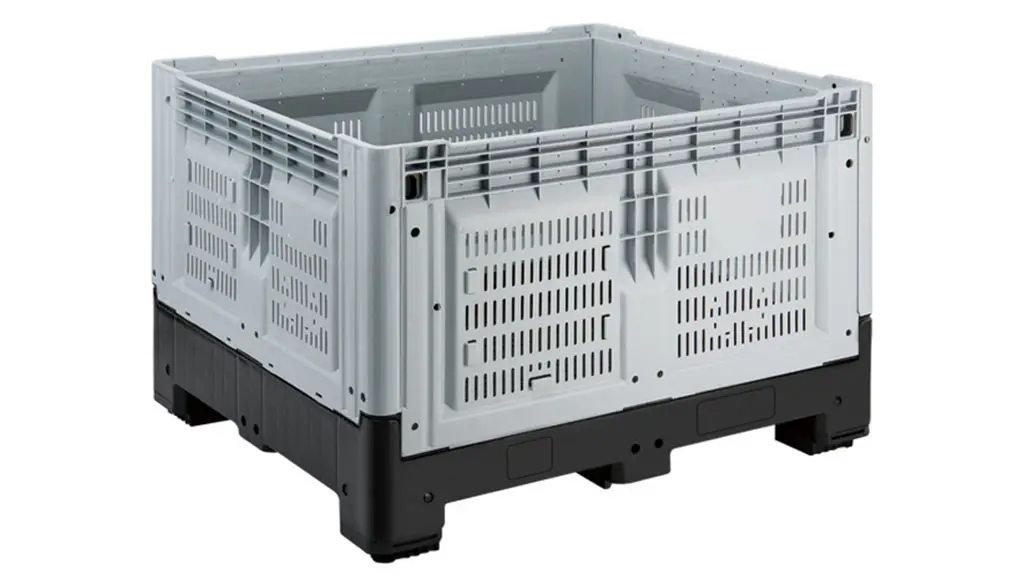
A folded box occupies less space, but its folding ratio does not tell you how many boxes will fit on your return vehicle. Before a bulk purchase, compare the number that can actually be returned safely, the way the carrier charges, and the time the boxes spend away from the shipper.
Start with one real return lane
Record the dispatch and return points, normal and peak quantities, collection frequency, vehicle type, and the time empty boxes wait at each end. Include lids, sleeves, liners and other parts that must travel back. A calculation for bare boxes will overstate capacity if those parts need separate space.
Keep the outbound requirement alongside the return calculation: usable internal dimensions, goods weight, product protection, forklift access and any loaded stacking requirement. A better empty return cannot compensate for a box that does not suit the goods.
Use folded dimensions as an initial comparison
For the same external footprint, multiplying length by width by height gives a useful geometric comparison. In a hypothetical example, a 1.2 × 1.0 m container occupies 0.96 m³ at 0.80 m high and 0.384 m³ at 0.32 m high. That is a 60% reduction in this rectangular envelope. These dimensions are arithmetic assumptions, not a Baoheng model specification.
This percentage is not a truck-capacity or freight-saving percentage. Dividing the vehicle’s total volume by 0.384 m³ ignores the layout of complete stacks, door access, clearances and permissible stacking.
Published manufacturer specifications distinguish collapsed height, return ratio and quantities for a stated trailer type. Such figures belong to that model and vehicle assumption; they cannot be transferred to another box or route.
Count complete stacks in the actual vehicle
Ask the supplier for the proposed model’s external dimensions when folded, the height of an actual folded stack, empty mass including returning accessories, and permitted stacking and handling conditions. Nesting or interlocking can make a stack height different from single-box height multiplied by quantity. A static warehouse stack limit does not by itself establish a transport limit.
Then agree a layout with the carrier or loading team:
- Determine usable floor positions from internal length and width, including wheel housings, securing equipment and any mixed cargo.
- Check how many folded units may form each stack under the model’s stated transport conditions, usable height, door opening and loading method.
- Check total mass, its distribution, stack stability and the securing arrangement. Do not load above a limit simply because height remains available.
For identical stacks of one model, floor positions × verified units per stack gives a layout count. Reduce it where any other constraint applies, and confirm the result by a safe trial load. For mixed stack heights or models, count each approved stack separately. Do not assume different models can be interlocked or stacked together.
Apply the same method to the current packaging. Only then do you have a comparable before-and-after quantity per return trip.
Convert capacity into the carrier’s actual charge
For a fixed batch moved in dedicated return trips, rounding batch quantity ÷ verified capacity per trip up to a whole number can estimate trips. The dispatch schedule and collection points still matter: waiting to fill a larger load may tie up boxes or disrupt supply.
Ask for prices based on the two verified loading plans. A full-vehicle rate, pallet-position rate and dimensional-weight rate can produce different results from the same space reduction. If empties share a vehicle with other goods, use the actual incremental charge. Space released on an already-paid return trip may have operational value without reducing the invoice.
Include folding and unfolding labour, cleaning, repair, loss, collection and replacement costs. Use observed cycle frequency and a range of return delays. Calculate payback only when the incremental investment and positive net benefit are supported; a service-life assumption is not a guaranteed result.
Check storage and circulation during the trial
At each site, calculate floor positions from peak empty quantity and the permitted warehouse stack, leaving handling access. Measure how quickly boxes are folded and how long they wait for return. Long delays, cleaning queues or missing lids can increase the pool needed even when the vehicle count improves.
Choose a trial period that covers representative outbound and return cycles, busy periods and likely delays. There is no universal number of weeks. Record actual empty units per trip, paid freight, dwell time, folding labour, losses and damage, and compare them with the assumptions. Review the folding and manual-handling checks before trial use.
For a model discussion, send Baoheng the required footprint, goods and load, quantity, handling method, destination and return pattern. Include the proposed vehicle and stacking conditions so dimensions and loading quantities can be confirmed for the product and order. Scale the purchase when the observed return arrangement supports it.