Buying Guides
Reach-Truck Aisles: Choose Pallet Size and Direction Together
Use the actual reach-truck data for load length, width, clearance, and pallet direction before fixing a plastic pallet footprint.
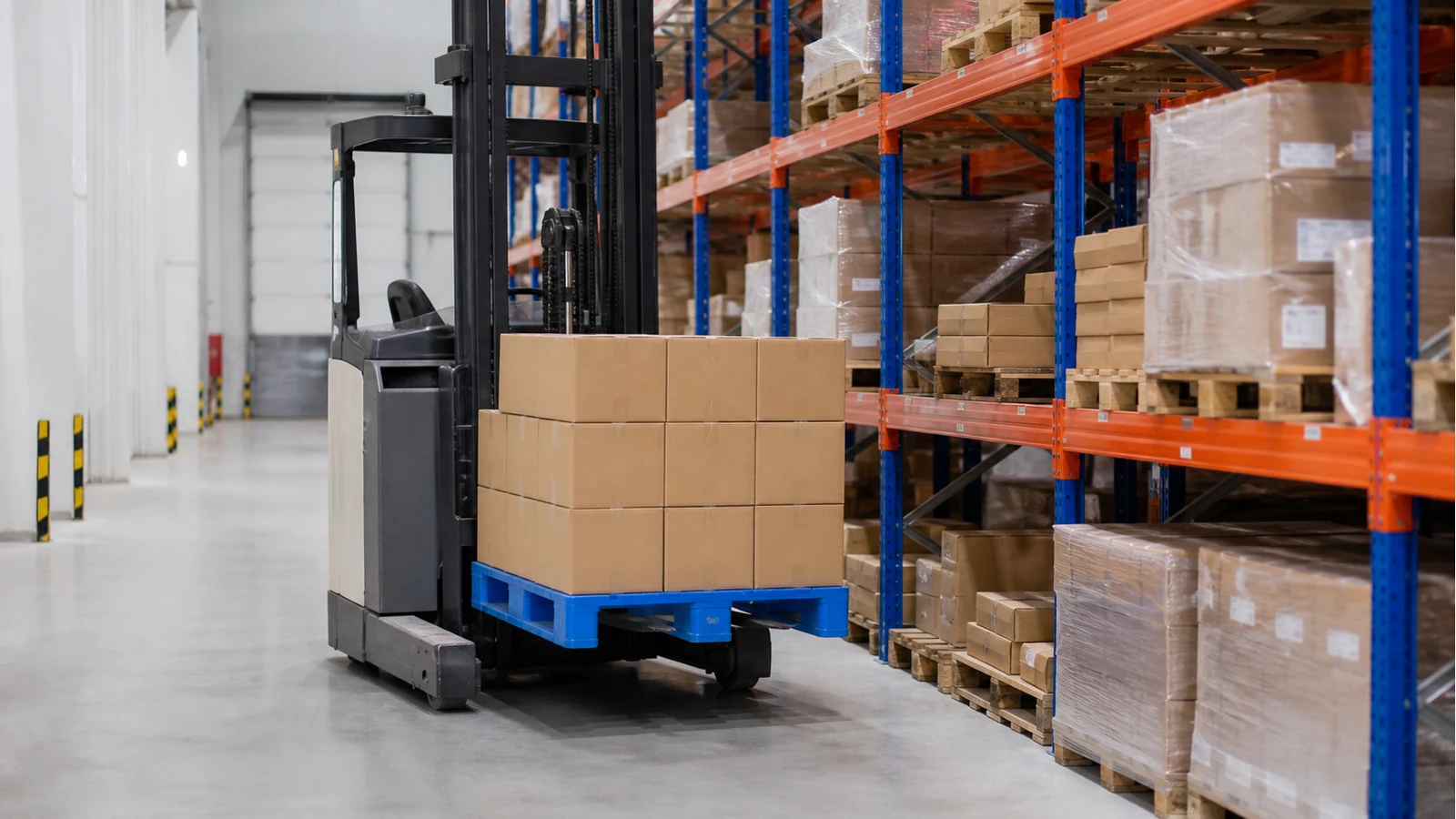
A plastic pallet that fits the forks can still be the wrong choice for a reach-truck aisle. Before choosing its footprint or the direction it enters the rack, get the exact truck model’s right-angle-stacking data for the completed load. Pallet size and direction change the load dimensions used in that calculation; they are not merely warehouse-layout details.
Choose the pallet only after the warehouse can state the truck, rack method, intended load direction, and the clearance basis it will use. This avoids buying a pallet that works at the dock but creates an avoidable aisle or deposit constraint in the storage zone.
Start with the truck data, not a standard pallet size
Reach-truck documentation makes the connection explicit. A Crown ESR 1000 specification sheet lists separate aisle-width entries for 1000 × 1200 mm pallets placed crossways and 800 × 1200 mm pallets placed lengthways. That is a model-specific example, not a universal clearance rule, but it shows why “fits the forks” is too little information for a narrow-aisle pallet decision.
A Toyota reach-truck specification sheet similarly says its push-back-rack right-angle-stacking aisle width is calculated from truck head length, load length, and clearance. Its tables also vary with load width and length. Use the data for the actual truck and configuration; do not copy a number from either example into another warehouse.
Make one orientation sheet before requesting quotes
Give the pallet supplier and warehouse team this single set of inputs:
| Input | What to state |
|---|---|
| Truck and configuration | Exact reach-truck model, battery or chassis option, fork arrangement, sideshift or other attachment, and the manufacturer’s current data sheet |
| Load in storage position | Completed load length, width, height, mass, centre of gravity if relevant, and any carton or product overhang |
| Pallet candidate | Footprint, deck and runner geometry, entry direction, intended rack orientation, and whether it must also serve another route |
| Rack and aisle method | Rack type, deposit method, beam/support condition, aisle calculation source, required clearance, and the person who owns the layout decision |
This is a procurement input sheet, not a calculation method. The equipment owner decides which manual, options, allowance, and operating limits apply. A pallet supplier can provide pallet dimensions and geometry; it cannot approve the truck’s aisle, load envelope, or rack operation from a drawing alone.
Compare the two directions as two different load envelopes
For each pallet candidate, show the completed unit in both proposed travel-and-storage directions. Then ask the warehouse to obtain the right-angle-stacking figure for that exact load envelope from the truck manufacturer, dealer, or responsible layout owner.
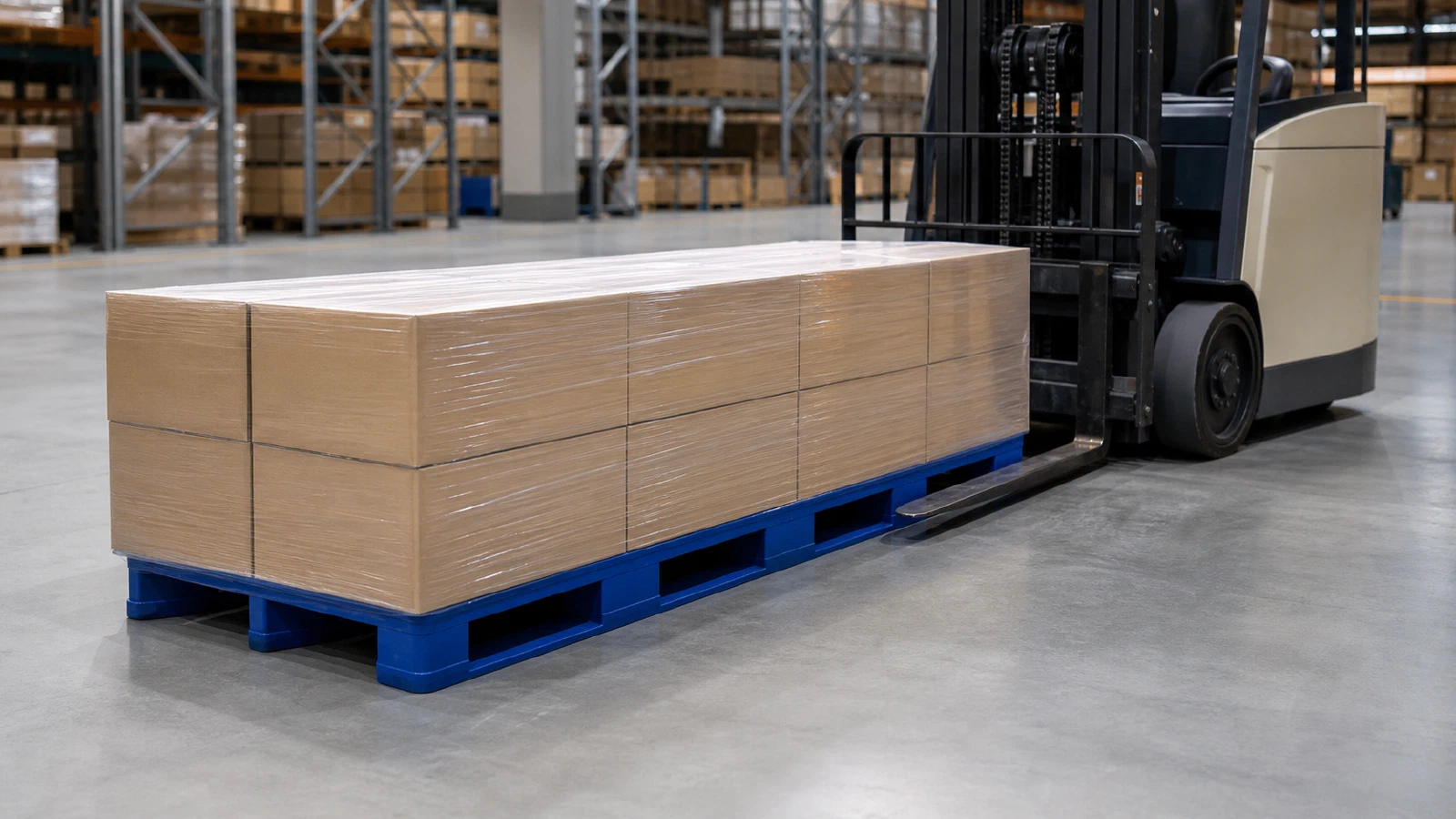
Do not assume that turning a rectangular pallet changes only where the labels face. It can change the load length presented to the truck, the clearance required during the turn, the way the unit approaches the rack, and the usable rack position. It may also change load-centre conditions. The existing load-centre guide explains why a different pallet-and-load orientation can require a truck-specific review even when the pallet fits the forks.
Keep the decision bounded
The published truck sheets support one useful rule: use the actual pallet-and-load orientation when obtaining aisle and rack-operation data. They do not establish a safe aisle width for every reach truck, rack, pallet, or load. They also do not prove pallet strength, rack suitability, capacity, stability, operator training, or local compliance.
After a direction is selected, keep the related checks separate. Use the rack-deflection guide for supported-storage evidence and the fork-entry clearance record for the actual fork interface. This page adds the purchase decision that comes earlier: select the pallet footprint and storage direction with the reach-truck aisle data, rather than treating either as an afterthought.
Before ordering or changing the layout, the equipment owner, rack/layout owner, site safety owner, pallet supplier, and load owner must confirm the actual truck documentation, completed load, clearances, rack condition, approved operating method, and applicable local requirements.