Industry Insights
Plastic Pallet Drainage and Drying After Washing: How to Prevent Water Retention in Hygienic Warehouses
A practical guide for food, beverage, pharmaceutical, and clean warehouse teams on specifying plastic pallet drainage, drying time, and post-wash release criteria.
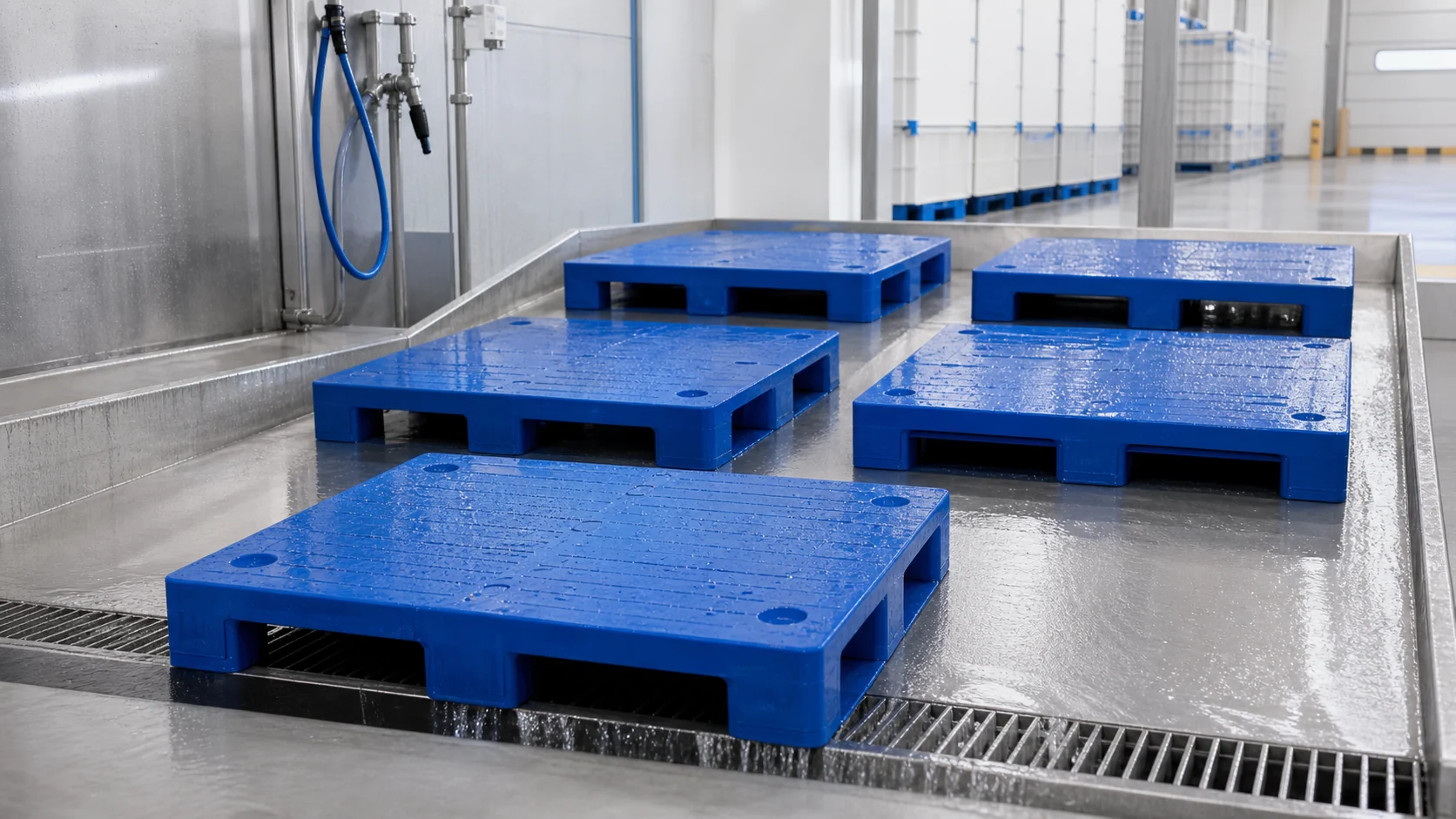
In hygienic warehouses, washing a plastic pallet is only half of the control process. The pallet must also drain, dry, and return to service without carrying standing water into clean storage, wrapping, racking, or chilled areas.
Water retention is easy to underestimate because it looks like a sanitation detail rather than a pallet specification issue. In practice, trapped water can delay release after cleaning, wet cartons, dilute sanitizer residue, create slip points, hide soil at molded corners, or freeze inside pallet cavities. A pallet that is easy to wash but slow to dry can still create daily friction for food, beverage, pharmaceutical, and clean production teams.
The practical question is:
How should buyers evaluate plastic pallet drainage and drying before approving a hygienic pallet for routine washdown use?
Treat drying time as part of pallet performance
Many purchasing specifications ask whether a pallet is washable. Fewer ask how long it takes to become usable after washing.
That gap matters. A warehouse may have enough wash capacity but still run short of clean-status pallets if drying time is longer than expected. Operators then face poor choices: release damp pallets, add manual wiping, increase pallet inventory, or slow product flow while pallets wait in the sanitation area.
For clean operations, the pallet specification should define the full post-wash cycle:
- how the pallet is washed;
- where water is expected to drain;
- whether the pallet can be air-dried, tilted, stacked, or tunnel-dried;
- the maximum acceptable dry-down time before release;
- the release check for pooling water, residue, and odor;
- the handling rule if the pallet remains wet after the target time.
Food-related operations often use broader cleanability principles when choosing handling equipment. In U.S. food manufacturing, 21 CFR 117.40 requires equipment and utensils to be designed and maintained so they can be adequately cleaned. A pallet may not always be a food-contact surface, but when it moves near open packaging, high-care zones, or cleaned-product staging, the same practical thinking applies: cleanable also needs to mean inspectable and releasable.
Map where water can hide on the pallet
Water does not only sit on the top deck. It can remain in small molded details that are hard to see during a quick shift inspection.
Check these areas on any sample pallet:
| Pallet area | What to inspect | Why it matters |
|---|---|---|
| Top deck corners | pooling near lips, ribs, or shallow pockets | can wet cartons or hide residue after washing |
| Anti-slip texture | retained droplets or detergent film | may reduce grip or make inspection slower |
| Fork openings | water inside entry lips or transitions | can drip during forklift movement |
| Runner cavities | trapped water in hollow or boxed sections | may increase drying time and odor risk |
| Label pockets | moisture around barcode, RFID, or molded logo areas | can damage labels or reduce scan reliability |
| Stacked pallets | water transferred from one pallet to the next | can make a clean stack damp for hours |
This inspection should be done after the real wash process, not only by looking at a dry catalog sample. Pressure direction, detergent foam, rinse volume, and stacking method all change where water remains.
Match deck design to the wash method
A smooth or closed top deck is often easier to wipe and inspect, but it still needs a drainage plan. An open deck may drain faster, but it can have more rib intersections and underside areas that collect soil.
The right choice depends on how the pallet is actually cleaned.
Manual hose or pressure washing often leaves water in corners and underside details unless operators tilt the pallet consistently. If this is the method, specify pallet orientations during rinse and drain-down, not only the wash chemicals.
Tunnel washing can be more repeatable, but the pallet must fit the machine and allow water to escape during exit. Pallet height, runner geometry, and deck channels should be checked with the tunnel supplier.
Foam and rinse sanitation may require more attention to texture and residue. A surface that looks clean while wet can show streaks or retained foam after partial drying.
Dry wipe or controlled low-water cleaning may suit some pharmaceutical or clean production support areas, but only when soil type and site procedure allow it.
If the operation is still deciding whether a closed deck is justified, the closed-deck plastic pallet selection guide can help separate hygiene support, load support, and drainage tradeoffs before the RFQ is finalized.
Do not approve a hygienic pallet from the top deck alone
Hygiene discussions often focus on the surface touching the load. That is important, but the underside of the pallet determines whether water and residue travel into the next area.
Before approval, turn the sample over and inspect:
- runner ends and internal transitions;
- any hollow areas where water can sit;
- welding seams, plugs, or reinforced sections;
- underside ribs near fork-entry points;
- places where floor splash can collect during washing;
- stack contact points that may trap moisture between pallets.
This is especially important for pallets used in rack storage or automation. A damp underside can drip onto lower goods, affect floor traction, or carry water into conveyors and lift tables. If the pallet will move through washdown, racking, and automated equipment, drainage should be reviewed together with dimensional and bottom-structure checks.
Set a clear post-wash release rule
“Looks clean” is too subjective for multi-shift warehouses. A release rule should be simple enough for operators and clear enough for quality teams.
A practical post-wash release checklist can include:
- No visible soil, label fragments, film, powder, or product residue.
- No standing water on the top deck, inside fork openings, or in runner cavities.
- No detergent foam or sanitizer film where product packaging may contact the pallet.
- No odor after drying.
- Barcode, RFID, or status marking remains readable.
- Damage inspection completed before the pallet returns to a clean zone.
The rule should also define what happens when a pallet fails: rewash, extended drying, manual wipe, repair review, or quarantine. This keeps sanitation decisions from becoming improvised during peak shipping hours.
For sites building a complete pallet hygiene program, this release rule can be added to a broader plastic pallet sanitation SOP for food warehouses .
Watch for chilled and freezer-area problems
Water retention becomes more serious when pallets move from washdown into chilled or freezer areas.
Common failure modes include:
- droplets freezing inside deck texture or runner cavities;
- ice reducing deck grip under cartons or crates;
- pallet jack wheels slipping on wet or icy pallet surfaces;
- frozen water expanding in small cavities;
- condensation forming when pallets move between temperature zones;
- damp pallets wetting carton bottoms before freezing.
A pallet may perform well in ambient storage but become a problem when the same washing process feeds cold-chain operations. For freezer or chilled lanes, test drying time under the actual sequence: wash, drain, dry, stage, enter cold room, and inspect again after temperature exposure.
If the project includes low-temperature handling, combine drainage checks with the material and impact criteria in this freezer-grade plastic pallet selection framework .
Compare pallet structures with a drying trial
A drying trial does not need to be complicated. It does need to be operationally real.
Use this sample method before a bulk order:
- Wash the sample pallet with the normal site method.
- Place it in the normal post-wash position: flat, tilted, stacked, or on a drying rack.
- Record the time at 15-minute intervals until it meets the release rule.
- Inspect the top deck, fork openings, underside, runner cavities, and label areas.
- Repeat the trial after several wash cycles, not only on a new pallet.
- Test the pallet with the actual load after release to check packaging contact and slipping.
- Repeat with the fastest shift practice, not only the ideal cleaning team.
The result should become part of the approval record. A pallet that dries in 20 minutes when tilted individually may not dry in 20 minutes when stacked tightly in a busy sanitation room. The approval should reflect how the warehouse will actually work.
Specify pallet features without overbuying
Drainage and drying requirements do not always mean buying the heaviest or most specialized pallet. The goal is to match pallet design to the clean-status workflow.
For high-care or pharmaceutical-adjacent areas, a smooth, one-piece deck such as the 1210 food and medical plastic pallet may be useful when inspection speed, cleanability, and load support are priorities. The final decision should still include drainage behavior, wash method, temperature exposure, load weight, and equipment compatibility.
For dry, sealed, low-risk goods, a more ventilated structure may be easier to drain and sufficient for the lane. For export or one-way flows, drying may be less important than pallet weight, nesting ratio, and freight efficiency.
The key is not to label one structure as universally hygienic. The key is to decide whether the pallet can move through the site’s cleaning, drying, release, and handling steps without creating hidden delay or contamination risk.
Write drainage and drying into the RFQ
Vague language such as “easy to clean” leaves too much room for interpretation. A better RFQ gives suppliers the application details they need to recommend the correct design.
Include:
- wash method, water pressure, detergent type, and rinse process;
- whether pallets are air-dried, tilted, tunnel-dried, or stacked after washing;
- maximum acceptable dry-down time before clean-zone release;
- areas where standing water is not acceptable;
- temperature movement after washing, especially chilled or freezer entry;
- whether labels, RFID, or color coding must survive repeated washing;
- required sample drying trial before bulk approval;
- rejection rule for pallets with water-trapping damage, cracks, or odor.
These details protect both sides. The buyer avoids a pallet that looks hygienic on arrival but slows daily sanitation. The supplier can recommend a structure that fits the actual process rather than guessing from a broad product category.
A better way to approve washable plastic pallets
A hygienic plastic pallet should be evaluated after cleaning, not only before use. The important evidence is how the pallet behaves when wet, how quickly it drains, whether operators can inspect it, and whether it returns to service without carrying water into the next process.
When buyers include drainage path, drying time, underside inspection, cold-room risk, and release criteria in the specification, pallet selection becomes more practical. The warehouse is not just buying a washable pallet. It is approving a pallet that can be washed, dried, checked, and used again at the speed the operation requires.